Winter is coming, which means you get to use your fireplace again. But do you know how to prepare a fireplace and chimney for cold weather? If not, don’t worry. This guide will teach you exactly how to do that. A prepared chimney means efficient burning fires and a safe home all winter long.
We will also discuss important safety tips and the pros and cons of preparing the fireplace yourself versus getting a professional chimney sweep to do it. Let’s go ahead and learn how to get your fireplace ready for winter.
How to Prepare A Fireplace and Chimney for Cold Weather
These are the steps you need to do so your fireplace and chimney are ready to use for the winter season.
Inspection and Assessment
Have a good look and inspect your chimney to see if there is damage to the flue tiles, bricks, chimney cap, and roof. Structural damage is a result of cold weather patterns and soil changes. If you notice any damage, you need to get it fixed before winter.
You also want to check for creosote buildup, as this is the leading cause of home heating fires. If it’s beyond ⅛ inch thick, it needs professional cleaning as this type of buildup is difficult to remove with just a simple brush.
Don’t forget to also check the damper, making sure it opens and closes smoothly. This part of your chimney helps regulate airflow and can be controlled via a push rod, rotary control, or pull chain. To check if the damper is open, place your hand in the unlit fireplace. You should feel a draft coming down the chimney. If you don’t feel cold air coming down, it means it’s closed.
Cleaning and Maintenance
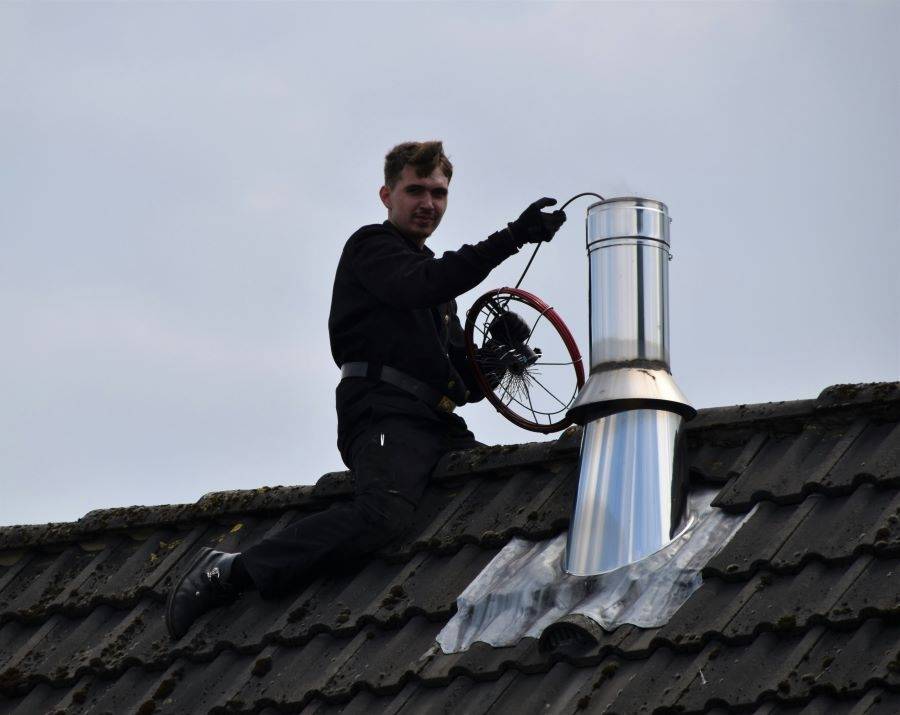
To clean your chimney, you need to get up safely on your roof and brush the creosote buildup inside. Using a chimney brush attached to an extension rod, brush the sides of the chimney. Keep adding extension rods as you work your way cleaning towards the bottom.
Next, you need to clean the firebox and grate, making sure you remove all ash, soot, and debris. Use a shovel to scoop the debris out and transfer it into a metal bucket. Get rid of any remaining ash and dust using a vacuum.
Clearing the firebox will help improve your fireplace’s efficiency and remove harmful creosote buildup, which is a leading cause of house fires.
Additionally, you will need to check the flue for obstructions. Some signs that indicate a blocked flue include difficulty starting a fire, fires burning out too quickly, black, tarry flakes inside the flue, and strange odors inside the firebox. If you notice any of these warning signs, it means something is blocking the flue, and you need to clear it out.
Sealing and Weatherproofing
After cleaning, you want to seal and weatherproof your chimney to prevent heat loss and drafts. Start by sealing gaps and cracks with poaching cement or caulk. This process will only work on minor cracks. For severely damaged chimney mortar and joints, you’ll need to contact a professional to fix it.
Next, install a chimney cap to protect the inside from debris, rain, animals, and downdrafts. This protective cover is made out of steel or copper mesh and is placed on top of the chimney flue. If you already have a chimney cap, check to see if there is rust or missing guards. If you notice damage, purchase a right-sized replacement right away.
For days when you’re not going to use the fireplace, make sure to close the damper to keep cold air from coming in. This is important because if your fireplace gets too cold, you’ll have a difficult time starting a fire.
Firewood and Fuel
Now it’s time to prepare your fuel. Quality fuel is important for an efficient-running fireplace all winter season. Only choose properly seasoned wood such as oak, hickory, or maple. These burn more slowly and produce less creosote compared to other types of wood.
For storing large batches of wood, the most important thing to remember is that moisture is its number one enemy. When wood is wet, it burns inefficiently, producing excessive smoke and particulate matter, which can be dangerous when inhaled.
The best place to store wood is outside of your home, where it can get proper ventilation. You don’t want it inside your house because it can invite termites.
If you have a wooden pallet or plastic sheeting, place your woodpile on top of it. Make sure the woodpile is off the ground so as not to invite moisture and pests.
There’s also an art to stacking your firewood. You’ll want to stack them loosely or in alternating directions to allow air to circulate and keep them dry.
Safety Tips for Using Your Fireplace in Cold Weather
These are important safety tips you should follow for using your fireplace during the winter.
• Install a Carbon Monoxide Detector: The fireplace is one of the most common causes of carbon monoxide poisoning. With this in mind, you must have a carbon monoxide detector in the same room as the fireplace.
Placement is essential for the device to work properly. The alarm should be at least one meter away from the fireplace, at around 5 or 6 feet above the floor. Don’t put it behind furniture, in a cupboard, near a fan, or any area with lots of condensation since this can affect the detector’s function.
Test the alarm by holding the test button until you hear an alarm sound for three to five seconds. The test button’s position will vary from unit to unit, so make sure to check your manual first before testing. Test the alarm once a month to make sure it is still working.
• Use Fireplace Screen and Hearth Safety: Install a fireplace screen to protect your children and pets from flying sparks and embers. If there’s a sudden downdraft, the screen can help reduce the amount of smoke that blows back into the room.
When burning logs, it’s not uncommon for them to shift positions as they burn. The fireplace screen can prevent these logs from rolling out of the fireplace and onto your floor.
• Always Supervise Fire Closely: Keep an eye on your fire at all times, especially when you have kids or pets around. If you have to leave the room while the fireplace is still in use, take your child or pet with you. Before you go to bed or leave the house, check to see that the fire is completely out.
DIY Maintenance vs Professional Fireplace Service
In this section, we discuss the pros and cons of doing a DIY maintenance of your chimney versus getting a professional fireplace service.
DIY Maintenance
Pros:
• You can do maintenance all year round. No need to wait before winter. You can begin performing maintenance tasks on your desired schedule.
• You can save time since you don’t have to wait for an appointment with a professional.
• You save money since you don’t need to pay a professional.
Cons:
• Maintaining your fireplace can be a challenging task that involves several steps and the use of specific tools.
• Without protective gear, DIY maintenance could be detrimental to your health. Breathing creosote fumes can irritate your lungs and cause health problems in the long run.
• If your fireplace doesn’t work well despite having cleaned and maintained it, there’s no way to tell what the problem is unless you get it checked by a certified technician.
Professional Fireplace Service
Pros:
• A certified technician can handle everything, including cleaning, inspecting, and maintaining your fireplace. They can also give you expert advice on how to best maintain your fireplace.
• Professionals are able to handle more difficult jobs such as:
• Removing creosote buildup thicker than ⅛ inch
• Reaching all areas of the flue
• Access the cap from a very high roof
• Severe brick and mortar damage
• Recognize chimney deterioration
• Recognize venting problems
Cons:
• Your maintenance appointment highly depends on the chimney sweep company’s next available schedule.
• Depending on the type of maintenance or repair needed, you may be paying anywhere between $150 to $700. The average cost of chimney cleaning and repair is $700.
Conclusion
So, you just learned to get your fireplace ready for winter. That means inspecting for creosote buildup, cracks, damage, and obstructions. You also need to check that all parts, such as the damper and chimney cap, are working properly. Get only the best quality wood and store it properly. Don’t forget to get a CO detector and a fire screen.
Take all these steps to ensure that your home is free from toxic gasses and fire hazards. You want to be proactive in doing these so you have a proper-working fireplace all winter long.
Ensure your warmth and safety this winter: schedule your chimney sweep today!