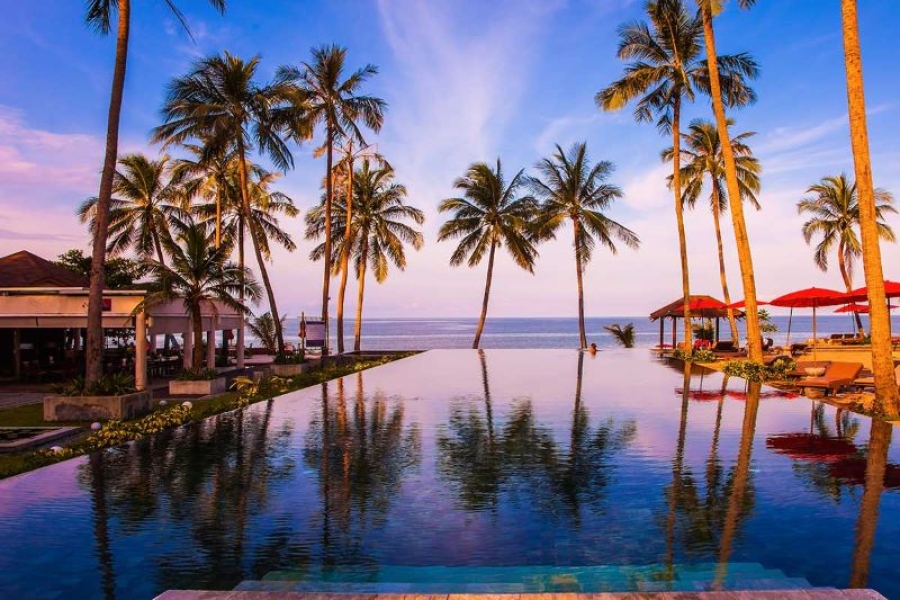
Once primarily known as a favourite place for backpackers, following consistent improvements in air connectivity and infrastructure, the magical island of Koh Samui in the Gulf of Thailand has steadily developed into one of Asia’s leading destinations for luxury real estate investment. Today with its palm-fringed beaches, ocean view properties, beachfront villas, and laid-back island lifestyle, the island attracts discerning buyers from around the globe. We have compiled this based on 20 years of experience marketing luxury property for sale in Koh Samui, and this article serves as a concise buying guide for high-end residential real estate on the island.
Defining Luxury Property in Koh Samui
For this article, luxury property in Koh Samui refers to properties priced above 30 million THB. At this price point, buyers gain access to high-quality ocean view villas that are ideal for both lifestyle and investment purposes. The market for luxury properties on the island extends to prices as high as 8 million USD, including exclusive beachfront estates, upscale sea view residences and architecturally bespoke homes designed to international standards.
Koh Samui's Robust Real Estate Market
The property market in Koh Samui, much like Phuket, is driven by its vibrant and growing tourism sector. Most property investors first become acquainted with Koh Samui’s charm and its investment possibilities as tourists. Later, they decide to invest, drawn by the island’s tropical island lifestyle, continually improving infrastructure, air connectivity and appealing real estate opportunities.
An overwhelming majority of luxury residential property transactions in Koh Samui involve foreign investors on both sides of the deal. With mortgages unavailable to foreign buyers in Thailand, the island’s residential property market operates as a cash-based market. This direct correlation with tourism ensures a steady flow of investment, allowing Koh Samui’s property to deliver consistently robust performance figures.
Unlike many other property markets that face challenges such as rising interest rates, inflation, or geopolitical tensions, Koh Samui real estate has continued to thrive. Its link with tourism as the key driver of the market provides a unique stability, insulating it from broader global economic downturns.
This strength and resilience were most recently demonstrated by the rapid recovery of Koh Samui’s property market following the Covid epidemic. As tourism quickly bounced back, the real estate sector followed suit, reaffirming its robustness and its critical connection to the island’s vibrant and growing tourism industry. Paving the way for continued buoyancy in its resort property markets such as Koh Samui and Phuket, Thailand tourist arrivals for 2024 exceeded 35 million, source TAT News, 25% more than 2023 and looking ahead through 2025 and beyond, the future for real estate in Koh Samui looks good.
Ownership Structures: Freehold vs. Leasehold
Thailand's property laws impose restrictions on foreign land ownership, which impacts how high-value properties in Koh Samui can be purchased. For luxury properties, freehold ownership through a compliant corporate structure is the most relevant option, with leasehold arrangements being more common for lower-priced properties.
Freehold Ownership via Corporate Structures
To acquire freehold land, foreign buyers typically establish a Thai limited company. This company must comply with stringent regulations:
• Thai nationals must hold a majority (at least 51%) of the shares.
• The company must function as a legitimate business, generating revenue and compensating shareholders.
• Annual financial reports must be filed to maintain compliance with Thai law.
The financial feasibility of setting up a corporate holding structure becomes viable when dealing with luxury villas, where costs associated with legal and business compliance are justified by the property's value and potential rental income. A compliant company may operate the villa as a rental business, with income distributed as dividends to Thai shareholders. This approach aligns with the 2024 crackdown on nominee structures, which aimed to prevent the use of illegal corporate ownership structures for freehold villas by overseas investors.
Leasehold Ownership
Leasehold tenure, limited to a maximum of 30 years under Thai law, is less common in the Samui’s luxury sector. While some developers market renewable leases, these renewals may not be legally enforceable, making leasehold ownership less secure for high-value investments. As a result, most buyers in the luxury segment prefer freehold arrangements.
Koh Samui vs. Phuket: Choosing the Right Destination
Investors must first decide whether Koh Samui or Phuket better suits their goals. While both islands are top-tier destinations for property investment, they offer distinct advantages based on property type, pricing, and market maturity.
• Freehold Condominiums: Phuket offers a broad selection of branded developments with freehold condominium units, making it an ideal choice for buyers seeking hassle-free ownership. Koh Samui, by contrast, has significantly fewer freehold condominium options. At the time of writing this article, the only example on Koh Samui of a development by a truly international brand is The Estates by Four Seasons, a high-end resort villa project in Bang Por launched 2013. In stark contrast, branded developments in Phuket are too numerous to mention. However, notable prolific examples recently coming on to Phuket’s real estate market are The Standard Residences in Bang Tao, Tri Vanada at Thep Krasatti and Banyan Tree’s Laguna Lakeside Residences, to name just a few.
• Luxury Villas - Value for Money: When comparing like-for-like properties, luxury villas in Koh Samui offer better value for money. This advantage becomes apparent when considering metrics such as price per sqm of build area and the size of the land plot. Land prices in Koh Samui, while having risen significantly over the past decade, remain considerably cheaper than Phuket. This difference is largely attributed to Phuket’s more mature property market, which has naturally evolved higher prices due to land scarcity and increased demand. Phuket also benefits from superior infrastructure, including developed road networks, better air connectivity, and a wider range of facilities and services such as international schools and high-end shopping centres. These factors drive up property and land prices, further widening the price gap between the two islands. Koh Samui, while less mature, offers a compelling opportunity for investors seeking luxury villas at competitive prices. Buyers can benefit from larger land plots, lower overall costs, and the potential for long-term capital appreciation as the island continues to develop.
• Atmosphere and Lifestyle: Despite its ongoing development, Koh Samui retains a more relaxed and tranquil island feel compared to Phuket. Many buyers are drawn to its laid-back atmosphere and beaches, which can arguably be considered better than those on Phuket.
Key Locations for Luxury Property in Koh Samui
Koh Samui’s geography caters to various preferences, from vibrant tourist hubs to tranquil beachfronts. The most sought-after areas include:
• Choeng Mon and Plai Laem: Known for their proximity to amenities and stunning beaches, these areas feature exclusive ocean-view properties.
• Bo Phut: Famous for Fisherman’s Village, Bo Phut combines high-end dining and boutique shopping with hillside villas offering panoramic views.
• Lamai: The second-largest tourist area, Lamai boasts hillside developments with breathtaking views and quieter beaches.
• Lipa Noi: Renowned for its exclusive beachfront estates and dramatic sunsets, Lipa Noi is ideal for buyers seeking seclusion and luxury.
• Bang Por: Located on Koh Samui’s north-west coast, this up-and-coming area is becoming popular for luxury villas due to its quality sandy beach and easy access to Maenam and Bo Phut via the ring road.
Market Trends and Investment Potential
Koh Samui offers unique opportunities for luxury property investment:
• Capital Appreciation: The island’s less mature market compared to Phuket offers long-term growth potential, particularly in underdeveloped areas. However, it is important to note that reliable data on property price increases is limited. This is partly because, in the case of freehold villas, the freehold is often held within a company. When these properties are resold, the transaction typically involves a company takeover rather than a real estate sale recorded at the land office. Furthermore, large international agencies that produce detailed sales statistics, such as CBRE and Knight Frank, do not have a foothold on the island. Given this lack of published sales data, prospective investors are advised to consult with experienced real estate agents who can provide real-world examples of property price increases in different areas of Koh Samui. A good agent will have local expertise and access to relevant market insights that are not available through official statistics.
• Rental Yields: As a general guide, well-managed properties in locations that appeal to the luxury short-term rental sector can achieve a 6 to 8% net return on investment. However, when examining the super-luxury sector, net returns are generally more modest due to the large capital outlay and higher running costs.
Legal and Practical Considerations
Navigating the purchase of luxury property in Koh Samui involves understanding several legal and practical aspects:
• Due Diligence: Buyers should work with experienced lawyers to verify land titles, review contracts, and ensure compliance with local laws. It is critical that any freehold corporate structure used to hold the freehold of the villa (i.e., the freehold of the land) is set up, operated, and administered in a way that is fully compliant with Thai law. Ensuring this compliance helps avoid legal issues and safeguards the investment.
• Taxation: Rental income is subject to Thai personal income tax, with rates ranging from 5% to 35%, or corporate income tax for properties held in company structures (15–20%). Tax advisors can help ensure compliance.
• Property Management: Investors can opt for in-house management services offered by some developments or independent management companies, which typically charge 20–25% of rental income.
Choose the Right Real Estate Agent
Selecting the right real estate agent is crucial to ensuring a smooth and successful property investment in Koh Samui. Do your research and choose an experienced independent agency with high integrity. A reliable agent will streamline your property search, presenting all suitable options while having access to the entire market of properties for sale on the island. Not only critical regarding choosing the right property, having the best possible agent is also very important because they will also typically also recommend the buyer’s lawyer.
Beyond helping you identify the right property, a good agent will arrange viewings and offer valuable advice throughout the process, including insights into market trends and real-world examples of property price increases in different areas. Their role doesn’t end at the point of purchase; dependable agents provide after-sales support, helping you navigate property management and other post-purchase needs.
The Future of Koh Samui’s Luxury Property Market
In 2024, the government of Thailand officially announced several proposed legal reforms to regulations concerning foreign ownership of property in Thailand. Because allowing easier acquisition of real estate in the kingdom by overseas investors is a contentious issue, these changes may or may not happen and are still awaiting full government approval. However, if they are enacted, they will undoubtedly provide a very significant positive stimulus to foreign investment in the real estate markets of Koh Samui, Phuket, and other resort destinations. The key points of these proposals are:
• Extended Lease Terms: A proposal to extend residential leases from 30 to 99 years would provide greater security for leasehold buyers.
• Higher Foreign Ownership Quotas: Increasing the foreign ownership quota for condominiums developments from 49% to 75% could expand opportunities for international investors.
Key Takeaways
Investing in luxury property in Koh Samui offers buyers access to high-quality villas in a market that combines value for money with long-term growth potential and an exceptional tropical island lifestyle. Understanding ownership structures and regulations, conducting thorough due diligence, and working with experienced real estate agents and lawyers are essential for a successful purchase. With its relaxed atmosphere, competitive pricing, and strong rental potential, Koh Samui remains a standout choice for discerning investors.