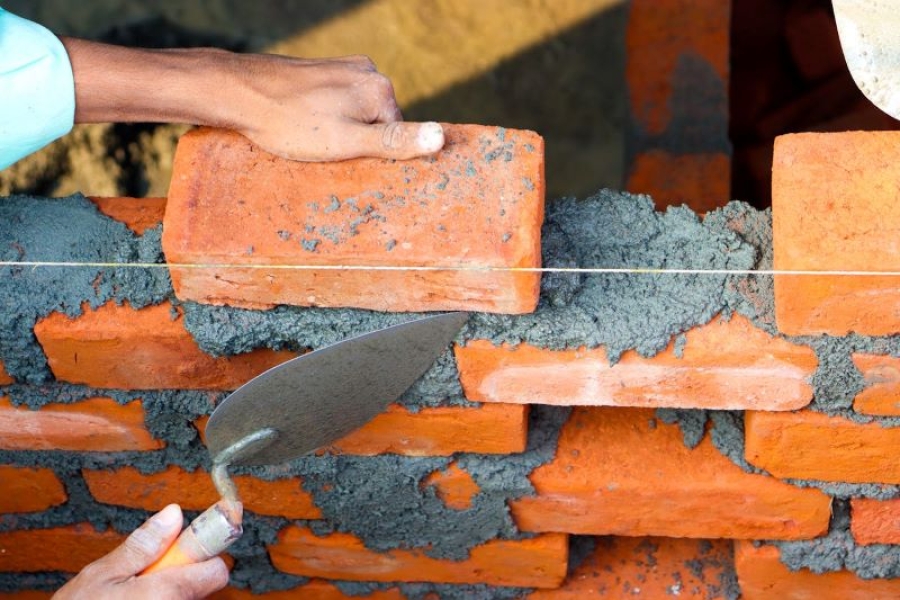
Masonry contractors offer several services, including bricklaying, concrete repair and replacement, stonework, tuckpointing, mortar repair and replacement, and fireplace and chimney repair. These repairs benefits residential and corporate clients in several ways, including the following:
• Increase in Property Value
• Energy Efficiency
• Improved Safety
• Longevity
• Reduced Maintenance
• Aesthetic Appeal
• Enhanced Functionality
It is, therefore, no surprise that clients – homeowners, businesses, and even institutions- hope to make the most of these skilled craftsmen. You can see this Q&A website for client conversations on the benefits of hiring a masonry contractor.
However, many of these benefits depend on choosing the right masonry contractor. This article explores several questions to ask to make an informed choice. So, read on to stay informed.

Do not just trust any Tom, Dick, and Harry that claims to be a professional masonry. There is a need for verification. This is so that you end up hiring one with the required expertise and experience. As a result, there are important questions to ask, focusing on the following aspects:
Local Licensing - Are You Licensed to Operate in My Location?
Every mason should understand that some general rules and principles apply in their line of work. They apply regardless of where clients need their services.
However, location-based regulations also apply, making it essential to ask the question, “Are you licensed to operate in my location?”
For example, there are laws binding on masonry contractors that operate in Toronto. This is particularly as it relates to the following:
• Repair and Restoration Projects in Parts of Historical Buildings
• Waterproofing
• Mortar Selection
• Dust and Noise Control
• Site Safety
Hiring a locally-licensed masonry contractor implies that the hired party is aware of these laws. It is also an indication that the local authorities trust the contractor to perform tasks in line with local regulations.
Certifications - Do You Have Any Relevant Certifications?
Some people believe that inherent skills alone make them qualified to work in this field. While inherent skill is valuable, meeting expectations in this profession requires much more. For this reason, you should ask the question, “Do you have any relevant certifications?”
An ideal contractor should hold two types of certifications. The first validates have gone through an educational program. For example, several colleges in Ontario offer masonry training programs.
Secondly, there are certifications from several industry associations. These industry associations issue certifications to professionals in this line of work as part of their effort to:
• Provide Resources and Training
• Ensure that Professionals Standards Are Upheld
• Manage Labor Relations in the Best Interest of these Professionals and their Clients
The CMCA (Canadian Masonry Contractors Association) is a prime example. For verification of CMCA-certified professionals and more information about this association, you can visit this website to learn more.
Reputation – Can You Provide References?
Yes, you would have to ask masonry contractors most of the questions. However, answers to some questions will have to be gotten from other sources like past clients.
The reason is that even incompetent and questionable options will claim to have a good reputation. You should therefore ask them if they can provide references from their past clients. You should also ask people around you who have hired masonry contractors about their opinions.
Besides word-of-mouth recommendations from such people, you can leverage online platforms that rate these professionals and even allow people to leave reviews about their services. Just ensure that any platform consulted is a credible one. Google and Yelp are prime examples.
You can also partly judge a mason’s reliability by going through the craftsman’s portfolio. So, make sure to do this as well.
Insurance – Do You Have Adequate Insurance Coverage?
All things being equal, property damage and accidents should not happen if the mason does a good enough job. However, this does not undermine the need to prioritize insurance and liability coverage when hiring these craftsmen.
One with adequate insurance cover is even likely to be the right choice and there are several justifications for this. For starters, it means that they are reliable and trustworthy since they meet their licensing requirement.
For this reason, asking for the details of their insurance cover is important. It can also save you from liabilities down the road.
Timeline – How Long with this Project Take?
Project delays are some of the frustrations shared by some previous clients who have hired these professionals, and it remains a worry for many prospective clients. As a result, there is a need to ask questions along that line. This important question can be broken down into the following:
• How do you ensure projects are completed on time and avoid delays?
• What is your project completion rate?
• Can you provide a detailed estimate of the project costs and timeline?
Expertise and Experience – How Long Have You been in the Masonry Business?
A mason can handle a very long list of tasks, some more common than others. Some of the tasks (in no particular order) are:
• Blocklaying
• Stonework
• Bricklaying
• Mortar Work
• Terrazzo Work
• Chimney and Fireplace Construction
• Concrete Work
• Tuckpointing
• Restoration
• Masonry Repair
Aside from these tasks, which may seem like a lot, a mason is expected to be able to perform some other tasks like material estimation, blueprint reading, and site preparation. You can see A&A Masonry for a comprehensive list of services offered by these professionals. The point here is that there are just so many tasks, and the chances of a mason being an expert in all of them are slim.
As a result, you should ask about the service specialties of masonry contractors being considered. This is also where experience rendering masonry services comes into play. For this reason, some questions to ask are -
How long have you been in the masonry business?
Do you have experience rendering specific services?
Conclusion
This article has covered six key areas that clients should inquire about when hiring a masonry contractor. While these do not form an exhaustive list, they are among the most crucial, and clients should give them due consideration. Other areas to focus on include quality control and communication.