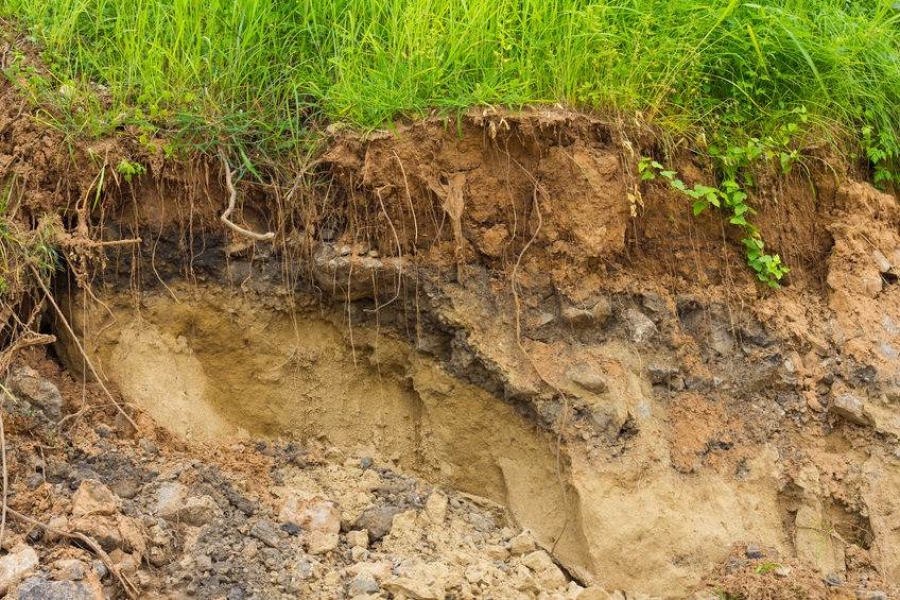
Although soil erosion mainly affects buildings located on steep inclines, this natural phenomenon continues to be a significant landscaping issue, dreaded by property owners from all walks of life. Some of the most telltale signs of soil erosion are failing plants, exposed plant roots, wet patches, soil cracks, and bare sections.
If left unresolved, soil erosion can have adverse effects on your property, including lowering its property value. Fortunately, there are erosion-control strategies that you can implement to avoid devastation associated with unregulated erosion.
Add vegetation cover
Planting shrubs and grass can successfully control soil erosion, as the plant life’s roots hold the soil in place. Additionally, the leaves minimize the raindrops' velocity, thus preventing the dirt from dislodging. Ornamental grass and shrubs that remain low to the ground are the best plants to use in your erosion-control efforts, as they provide complete soil cover.
Adding vegetation also makes your outdoor space more aesthetically pleasing. As you shop for plant coverage, try to balance practicality and beauty in your list of priorities. Consulting experts like those at this Colorado seed company and doing your due diligence will ensure that your yard adheres to erosion control standards. The company focuses on reclamation and beautification projects of all sizes and types, so customer satisfaction is guaranteed.
The most beautiful plant may not protect your property from damaging soil erosion. Unfortunately, you may have to sacrifice aesthetics in the interest of erosion control. If your yard is susceptible to erosion that can depreciate your property value, you should consider planting Creeping Junipers, Creeping Myrtle, Forsythia, Japanese spurge, Border Grass, Creeping Phlox, and Rockspray Cotoneaster.
Mulch
Mulch refers to any material that’s spread to cover the soil, suppress weeds, prevent frost, and retain soil moisture. Besides improving your property’s curb appeal, which attracts potential buyers, mulch acts as a defense mechanism against compaction and soil erosion.
Soil compaction occurs when people, machines, and animals walk on uncovered soil, compressing into a more compositionally-dense form. Soil compaction deteriorates the soil and increases the risk of erosion.
Mulch is available in both organic and inorganic forms. Organic mulch is often composed of straw, chipped or shredded bark, newspaper, grass clippings, or pine needles. Although you have to replace organic mulch when it decomposes, organic forms can improve your soil's organic content and structure. Woodier and dryer organic mulch have lower decomposition rates, so you’ll be able to enjoy years of use before you have to replace your mulch.
Inorganic mulch that’s composed of landscape fabric, black plastic, and gravel/stones is excellent for blocking weeds and retaining moisture. This type of mulch is also very durable and not prone to decomposition.
Permeable hardscape
All commercial properties have hardscapes. When replacing or installing, consider using permeable materials rather than concrete ones. Setting flagstones, stones, bricks in sand work offers excellent protection for walkways and patios, while permeable pavers such as crushed stone or gravel are more suitable for driveways.
If your commercial property receives heavy traffic, sowing grass seed or installing turf might be difficult. In this case, it would be best to use porous materials like flagstones, pea gravel, mulch, or river rock for soil protection.
Permeable hardscapes help retain soil coverage, are usually crowned, and are built with storm pipes and drains which drains excess water that accumulates on the surface, effectively preventing flooding.
Since you can locally obtain the fill materials, which lower transportation expenses, it’s more affordable to install permeable hardscape over concrete and asphalt. These environmentally-friendly permeable hardscapes can be recycled, thus lowering your waste production. Furthermore, a permeable hardscape is as durable as concrete, meaning it can comfortably support heavy equipment like forklifts, 18-wheelers, dump trucks, wheel loaders, and backhoes.
Use erosion control blankets
Erosion control blankets, also known as biodegradable blankets, offer temporary soil cover and support to sprouting plant life until the plant matures enough that it can provide permanent protection against soil erosion.
This erosion control method is more effective at preventing soil erosion on steep inclines and erosion generated by rainwater and wind. Erosion control blankets are also known to reduce compacting/crusting and increase water infiltration. This method can offer protection for up to a few years and provides nutrients for soil upon decomposition.
Creating water diversions
Depending on the slope's incline, diverting water can be quite useful in your soil erosion control strategy. You can easily create drains or ditches to direct water flow, or you can install gutters and pipes along the slopes. To successfully divert water, arrange your gutters and pipes carefully and strategically.
Diversion allows you to reduce water concentration on long slopes, minimize the flow volume across susceptible areas, and reduce your chances of soil erosion-related property damage.
Build terraces
Sometimes, vegetation cover may not suffice in properly protecting your tenants against soil erosion’s damaging effects, especially if your property is located on an extremely steep slope. In such cases, building a terrace is recommended for lowering erosion rates, if your plants have not reached maturity and aren’t capable of regulating erosion.
You can make terraces from any material, including concrete blocks, wood, and bio-mechanical products such as the Cascadia Green Wall. You can use the terraces beds to plant your vegetation that will contribute to your erosion control strategy.
Final thoughts
Adopting prevention measures to curb soil erosion is the key to protecting, restoring, and maintaining topsoil health, landscape health and appearance, and the visual appeal of the entire property. Hiring a reputable company is an essential step in water management, soil erosion prevention, and maintenance services, alike.