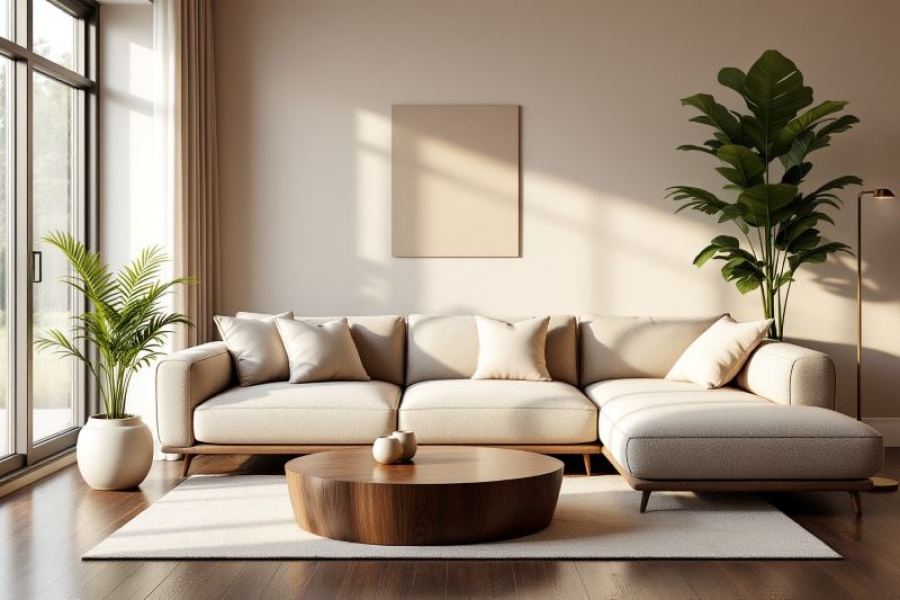
When staging a home for sale, furniture selection plays a major role in influencing buyer perception. Among all furniture pieces, the sectional sofa is often the anchor of a living room. It can define space, add visual interest, and create an inviting feel.
Choosing the right sectional requires more than finding something that looks good. Stagers must weigh proportions, color, style, layout, quality, and flexibility - while ensuring the piece complements the architecture and overall tone of the home.
This guide outlines what to look for when selecting a sectional sofa to enhance a home’s market appeal and maximize staging effectiveness.
Size and Proportion Matter Most
Match the Scale of the Room
A sectional that is too large can overwhelm a space, making it feel cramped. One that is too small may look underwhelming or create awkward gaps.
• In small or mid-size living rooms, opt for L-shaped sectionals with slim arms and low backs.
• In larger living areas, a U-shaped or wider L-shaped sectional can help define the seating zone and reduce visual emptiness.
• Leave at least 18–24 inches of space between the sofa and walls or walkways to ensure easy traffic flow.
Visual Weight
Look at the visual mass of the sectional. Bulky cushions and high backs add volume, which can help in larger rooms but should be avoided in tight spaces. A lighter visual footprint - open bases, low-profile arms, and neutral fabrics - suits smaller spaces better.
Configuration and Flexibility
Know the Standard Configurations
• L-Shaped Sectionals: Good for corner placement, compact layouts, or creating visual boundaries.
• U-Shaped Sectionals: Useful in open-plan living rooms to anchor a seating area.
• Chaise Sectionals: Add lounging space while keeping one side open.
• Modular Sectionals: Allow rearranging pieces to adapt to different layouts.
Consider Flow and Room Function
Ensure the configuration guides movement through the room. Avoid blocking doors, windows, or natural light. Sectionals can help segment open-concept layouts, but positioning must be intentional.
Custom sofa vendors like DreamSofa offer unique options tailored to your needs, allowing stagers and designers to select the exact dimensions and shapes to fit a space perfectly - particularly helpful when dealing with unconventional floorplans.
Style Consistency with the Home
Match Architectural and Interior Style
Buyers connect more easily with homes that feel cohesive. Match the sectional’s style to the home’s interior detailing.
• In mid-century modern homes, look for sectionals with tapered legs, structured lines, and simple silhouettes.
• For traditional spaces, curved arms, tufted backs, or more ornate detailing may suit better.
• In minimalist or contemporary interiors, clean lines, solid colors, and subtle textures are ideal.
Keep it Neutral
Avoid bold colors or patterns that could polarize buyers. Neutral colors such as beige, soft gray, ivory, or light taupe appeal to more people and work with a wide range of décor.
Fabric and Texture Selection
Prioritize Texture Over Pattern
Texture adds depth without overwhelming the space. Linen, cotton, boucle, or performance velvet can create visual interest without relying on color or print.
• Avoid glossy materials like leather unless staging a luxury or ultra-modern property.
• Stay away from heavy or outdated patterns like florals or plaids.
Durability and Cleanliness
Although stagers don’t expect wear and tear, staging furniture still needs to appear pristine. Choose fabrics that resist wrinkles and don’t easily attract lint or pet hair. Look for performance fabrics treated for stain resistance.
Color Theory and Light
Coordinate with Walls and Flooring
The sofa should not clash with existing fixed elements in the home. It should support the color palette already present.
• In homes with warm tones (e.g., wood flooring, cream walls), warm grays, beige, or taupe sectionals work well.
• Cool-toned homes (e.g., gray tile, white walls) benefit from cooler grays, icy blues, or off-whites.
Leverage Natural Light
Rooms with limited light benefit from lighter upholstery that reflects brightness. In contrast, bright rooms can handle slightly deeper tones without darkening the space.
Enhancing Visual Balance with Accessories
A sectional sofa rarely works alone. Pillows, throws, and surrounding décor play key roles in completing the scene.
• Use throw pillows to add subtle color accents that match the rest of the staging palette.
• Include a soft throw to create a sense of comfort and warmth.
• Anchor the sectional with a well-sized coffee table - ideally no more than two-thirds the length of the sofa.
• Layer with an area rug that extends beyond the edge of the sectional to ground the space.
Avoid excessive layering, bold patterns, or overcrowding. Accessories should support, not dominate.
Quality and Craftsmanship
Frame and Cushion Structure
Even if staging furniture isn’t meant for long-term use, poor construction is noticeable. Buyers often sit on furniture during viewings.
• Choose sectionals with hardwood frames and sinuous spring support for stability.
• Avoid hollow or lightweight frames, which can wobble or shift during showings.
Cushion Density
Cushions should offer medium firmness. Too soft can appear worn or sagging. Too firm can look stiff and uninviting.
Check that cushions retain shape after short use. Consistent edges and tailored seams suggest better craftsmanship.
Rental vs. Purchase Considerations
Renting Sectionals for Short-Term Staging
If staging for a brief listing period, renting may be more cost-effective. Rental options include preselected sectional sizes and styles curated for broad appeal.
Pros:
• Lower upfront investment
• Flexibility across projects
• Professional delivery and removal
Cons:
• Limited customization
• Recurring fees
• Potential wear from prior use
Buying for Reuse Across Projects
If you stage homes regularly, owning a few neutral, modular sectionals can be more practical.
Pros:
• Full control over quality and appearance
• Potential for long-term savings
• More customizability
Cons:
• Requires storage and transport logistics
• Higher upfront costs
Key Mistakes to Avoid
• Ignoring scale: Oversized sectionals in small rooms reduce buyer perception of usable space.
• Using bold colors or patterns: These may distract or alienate buyers.
• Poor placement: Blocking walkways or views makes the room feel closed off.
• Low-quality materials: Visible wear or sagging cushions reduce the property’s perceived value.
• Clashing styles: Mixing inconsistent furniture and architecture confuses buyers and reduces cohesion.
The Finishing Touch That Sells the Space
A sectional sofa isn’t just a seating option - it’s a staging tool that can either elevate or detract from the home’s appeal. By choosing a piece that fits the room’s scale, style, and flow, stagers can create a living area that feels open, intentional, and emotionally inviting. Every design element must serve a purpose in guiding buyers to imagine themselves living in the space. When chosen correctly, the sectional becomes the subtle centerpiece that pulls it all together - and helps sell the story of the home.